We wanted to solve one of the most tantalizing questions in regenerative biology: why do most animals lose their ability to regrow body parts as they mature? Frogs can regenerate limbs as tadpoles but lose this power around metamorphosis. Salamanders supposedly keep it throughout their lives. But previous studies were messy—scientists couldn't separate the effects of metamorphosis from age, body size, or developmental stage.
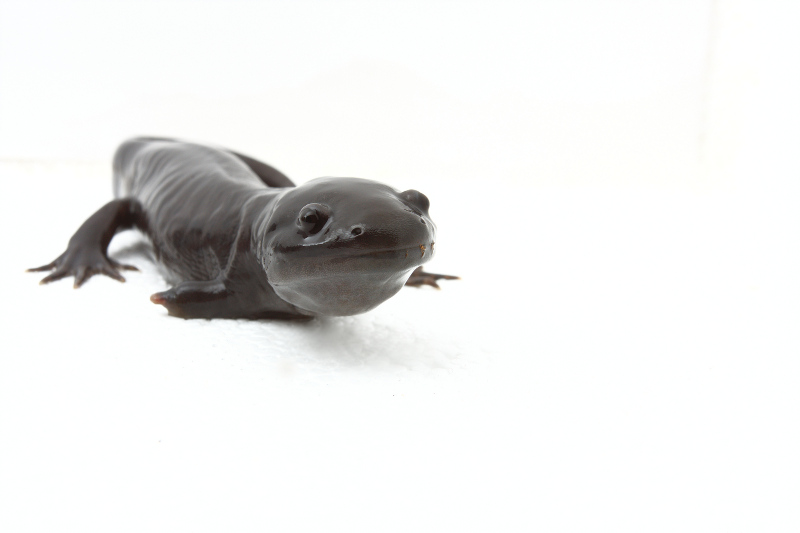
Axolotls provided the perfect solution. These salamanders normally never metamorphose, staying aquatic and larval-like forever. But We could force the transformation using thyroxine hormone, creating age-matched pairs where some stayed aquatic and others became terrestrial.
What they found was stark and unambiguous. When they amputated forelimbs and tracked regeneration, the metamorphic axolotls were dramatically slower, showing a twofold reduction in regeneration rate compared to their paedomorphic siblings. Even more troubling, the metamorphic animals developed carpal and digit malformations that their aquatic counterparts never showed. Body size, which researchers had suspected might be a factor, had no effect whatsoever.
"Even more troubling, the metamorphic animals developed carpal and digit malformations that their aquatic counterparts never showed."
The cellular story was equally revealing. When We examined the blastemal cells - those crucial progenitor cells that form the regenerating tissue - they found they were cycling more slowly in metamorphic animals and showing lower proliferative rates. But the precise mechanism remains unclear. The metamorphic limbs looked remarkably similar to paedomorphic ones before amputation, with ossified skeletons and similar tissue proportions. Whatever metamorphosis was doing to impair regeneration was subtle and hidden.
This matters because it suggests that metamorphosis itself - not just age or body size - actively constrains regeneration. The transformation appears to irreversibly alter how cells respond to injury, even in animals famous for their regenerative prowess. If scientists can understand what metamorphosis does to shut down these pathways, they might be able to reverse or prevent similar shutdowns in other animals, potentially opening new avenues for regenerative medicine.
The research raises important questions about the molecular mechanisms involved. What exactly does thyroxine do to these cells that makes them less regeneration-competent? Are there specific molecular switches being flipped during metamorphosis? The axolotl system provides a powerful tool to investigate these mechanisms, though the cellular and molecular details remain to be fully elucidated.
Citation
Monaghan, James R.; Stier, Adrian C.; Michonneau, François; Smith, Matthew D.; Pasch, Bret; Maden, Malcolm; Seifert, Ashley W. (2014). Experimentally induced metamorphosis in axolotls reduces regenerative rate and fidelity. Regeneration.
This paper is Open Access.
Cite this article
Monaghan et al. (2014). Axolotls Lose Their Superpower When They Transform Into Land Animals. Ocean Recoveries Lab. https://doi.org/10.1002/reg2.8