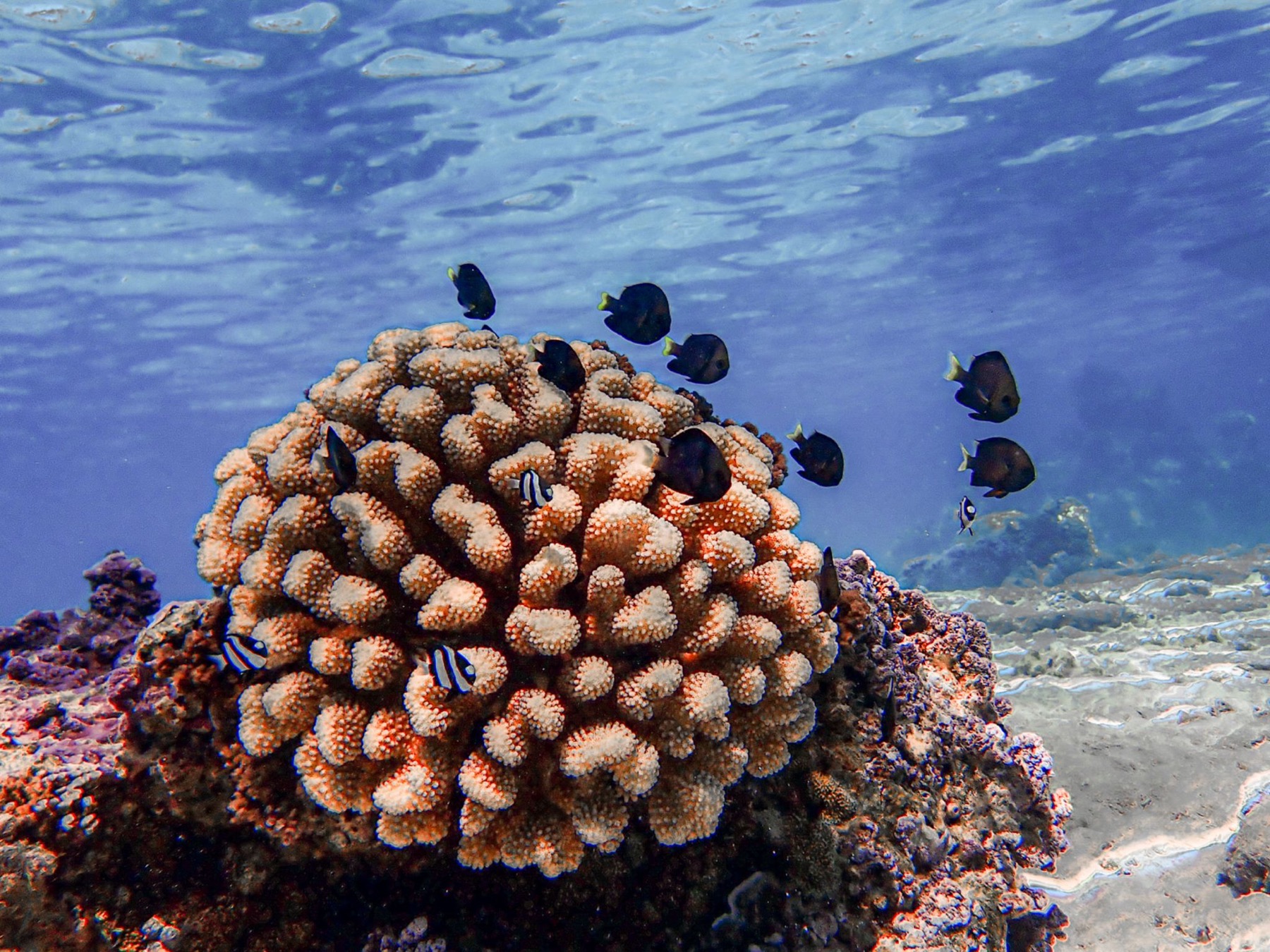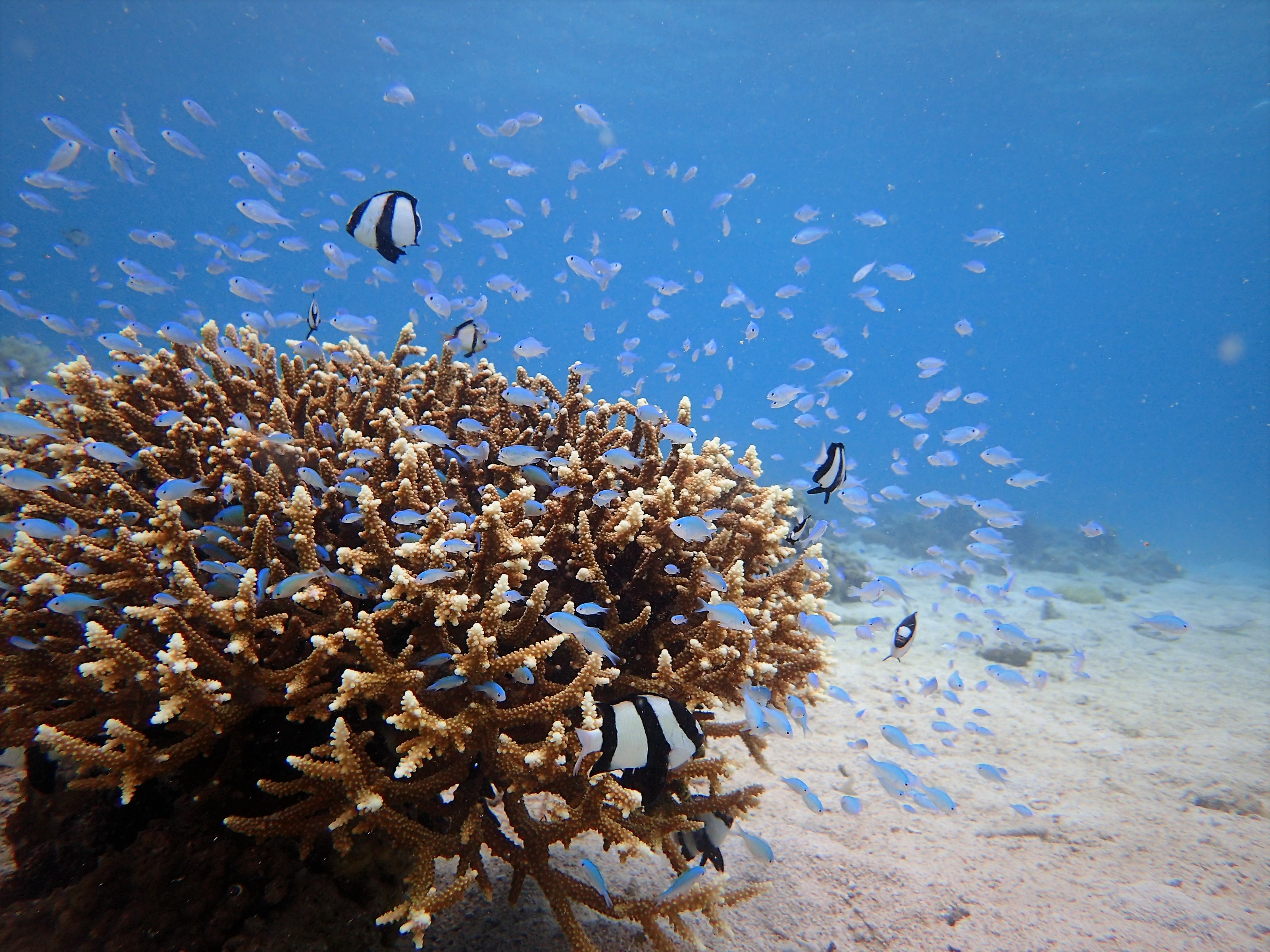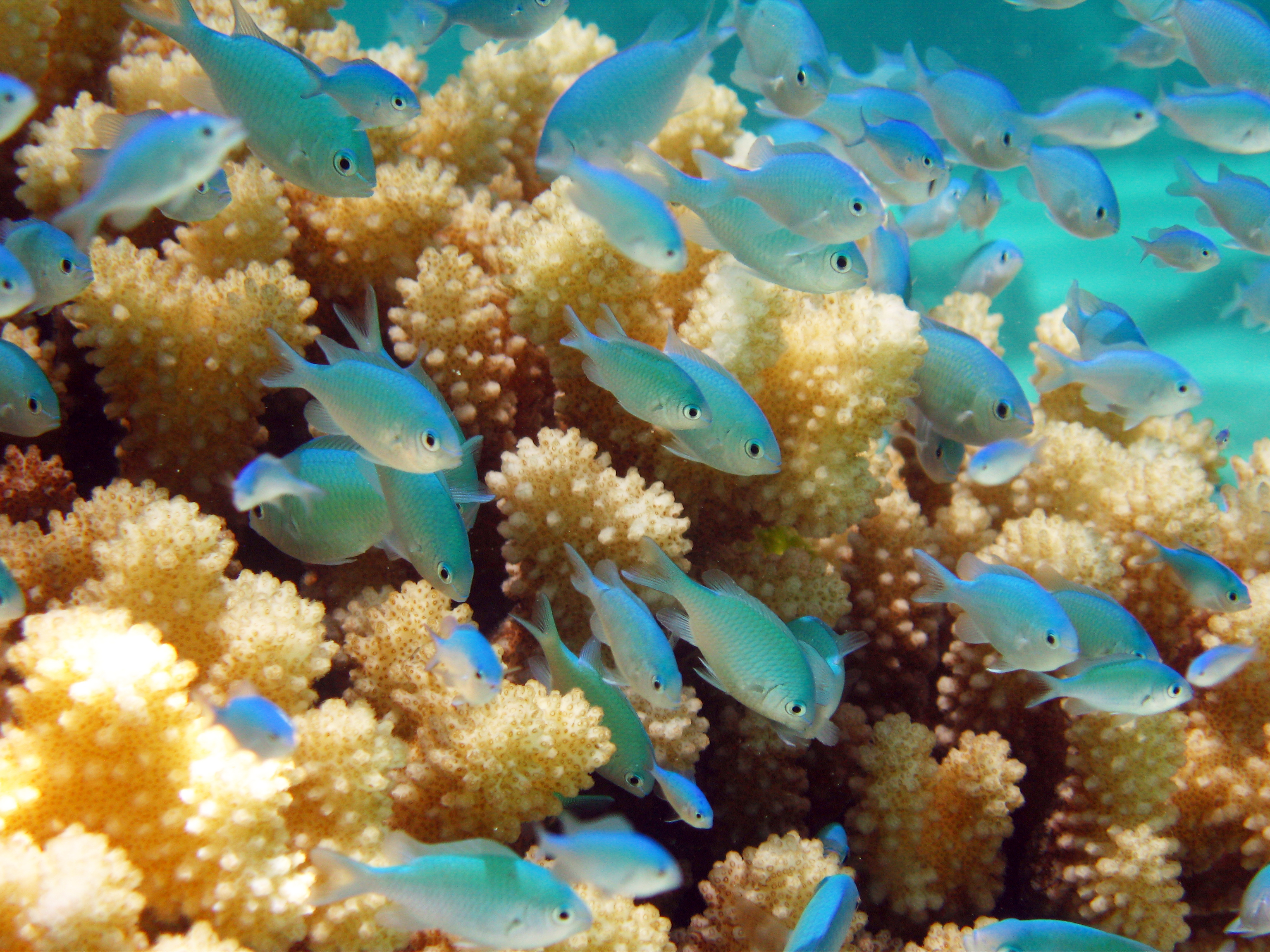
We studied coral reef fish settlement in French Polynesia and discovered that baby fish arriving on reefs face an immediate gauntlet of predators.
Stier and Osenberg wanted to test a fundamental question in marine ecology: when you add new habitat, do you actually increase the total number of colonists, or do you simply shuffle them around? The 'Field of Dreams' hypothesis suggests that if you build habitat, marine life will come in proportion to what you've built. But We suspected something more complex was happening - that new habitat might redirect larvae away from existing sites, creating what they called 'settlement shadows.'
To test this, they constructed 168 identical artificial reefs using cinder blocks topped with living coral colonies, arranging them in carefully designed patterns across 12 sites in Moorea's lagoon. The results were striking. Focal reefs without neighbors received two to four times more settlers than identical reefs surrounded by additional habitat. Yet when looking at the entire experimental array, total colonization increased only 1.3-fold despite a sixfold increase in reef area.
We monitored four fish species that comprised 88% of all settlers - two damselfish species, a wrasse, and a goby - and all showed the same pattern. The larvae were clearly being redirected, choosing to settle on lonelier reefs rather than crowded neighborhoods.
These findings challenge a cornerstone assumption of habitat restoration. We' mathematical modeling suggested that adding habitat increases fish populations primarily by reducing competition and density-dependent mortality at existing sites, rather than by attracting brand new colonists. This means restoration projects might be helping marine life in ways we haven't fully appreciated, but also that the benefits might be more limited than hoped. The implications stretch from coral reef restoration to marine protected area design.
Citation
Stier, Adrian C.; Osenberg, Craig W. (2010). Propagule redirection: Habitat availability reduces colonization and increases recruitment in reef fishes. Ecology.
Cite this article
Stier et al. (2010). Baby Fish Choose Lonelier Reefs Over Crowded Neighborhoods, Challenging 'Build It and They Will Come' Restoration. Ocean Recoveries Lab. https://doi.org/10.1890/09-1993.1