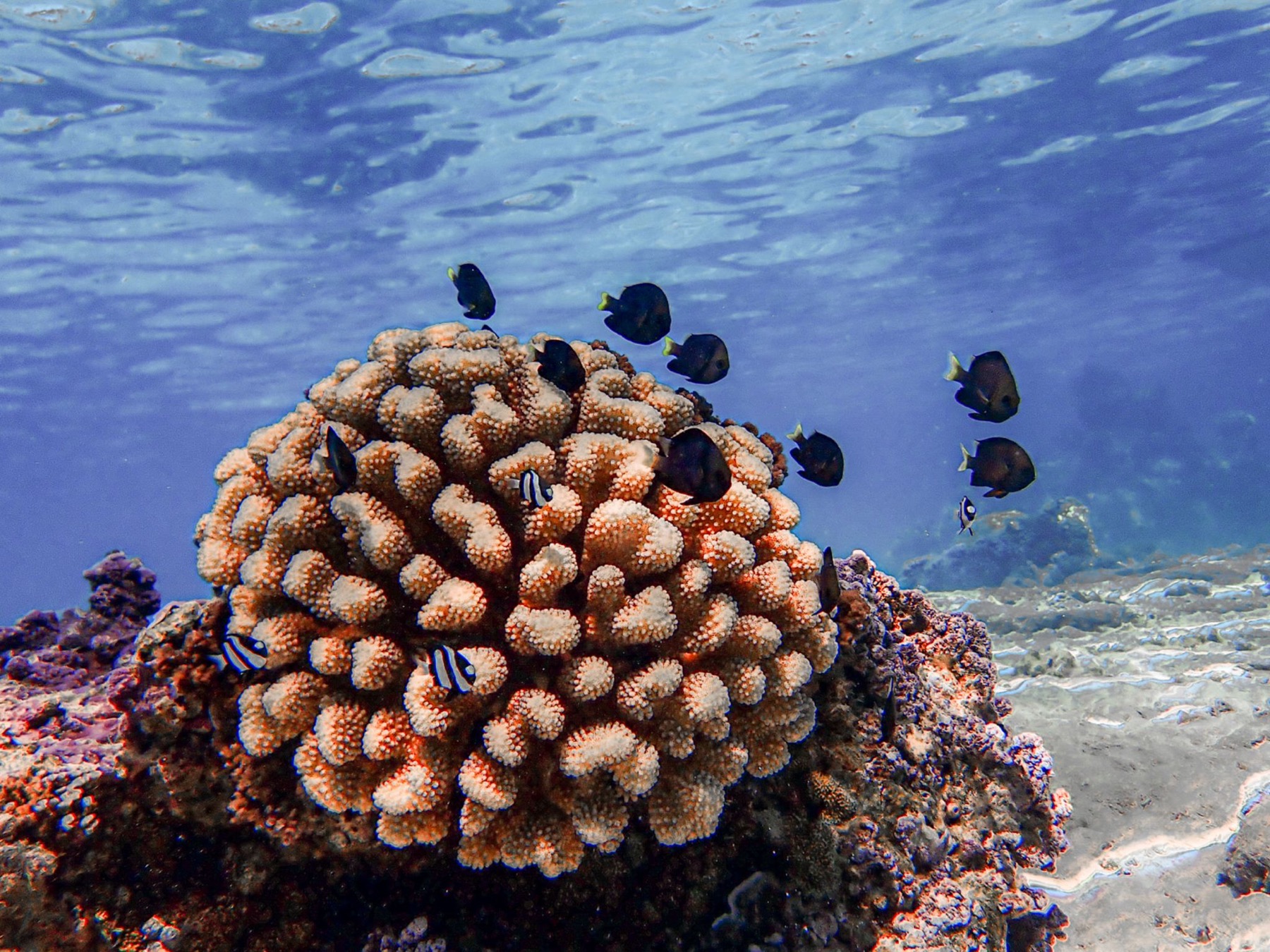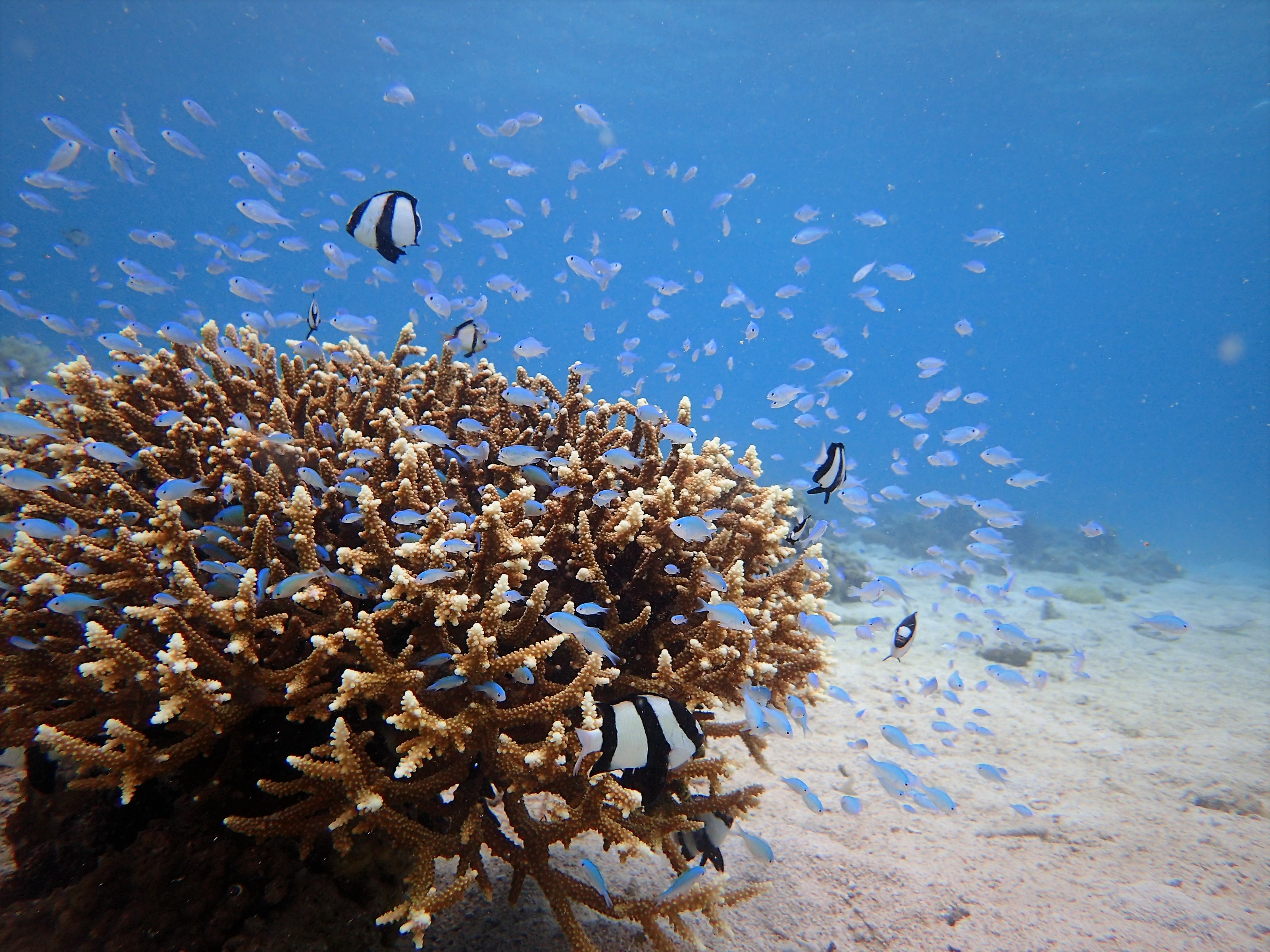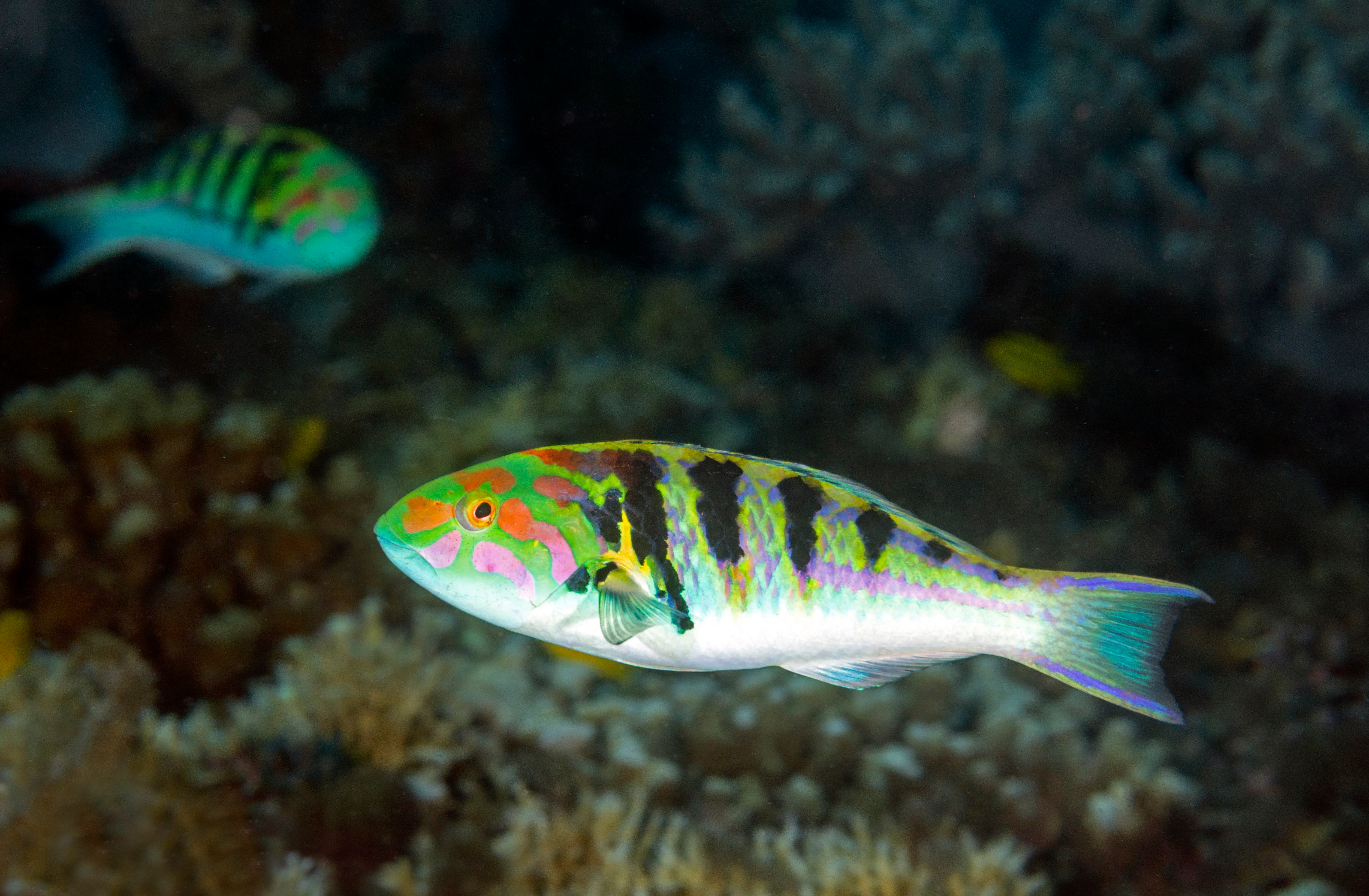
We studied young wrasse settling onto coral reefs in the lagoons of Moorea, French Polynesia.
We wanted to understand something that had puzzled marine biologists for years: why does timing matter so much in competitive interactions, and can complex habitats level the playing field? To find out, they constructed experimental patch reefs in Moorea's northern lagoon and manipulated two key variables—when young five-lined wrasse arrived (simultaneously or with a 5-day delay) and the structural complexity of their new homes. Then they observed what happened.
The results were stark. Simultaneous arrival with competitors resulted in that dramatic 2.89-fold increase in survival compared to arriving 5 days later. But habitat complexity told a more nuanced story. When fish arrived simultaneously or early, increasing habitat complexity boosted survival by 1.55-fold. However, for those unlucky late arrivals, habitat complexity provided no survival benefit whatsoever. Through behavioral observations, We discovered that survivorship was negatively correlated with aggression, and aggression by prior residents toward newcomers was significantly greater when focal individuals arrived 5 days later than when they arrived simultaneously.
What surprised We most was that increasing habitat complexity didn't reduce aggression at all. They had expected complex habitats to provide refuges that would dampen competitive interactions, but the data told a different story. It seems that when competitors arrive simultaneously, competitive interactions are weak and habitat complexity helps by disrupting predation. But when competitors arrive at different times, aggression intensifies and late arrivals get excluded from habitat resources entirely, making complexity irrelevant.
These findings matter because they reveal that competition isn't just about who's stronger or bigger—it's about when you show up to the party. As climate change shifts breeding seasons and larval transport patterns across the globe, small changes in settlement timing could have cascading effects on reef fish communities. A few days' difference in arrival time could determine which individuals survive to reproduce and which lineages persist.
But fundamental questions remain about the mechanisms at play. Scientists still don't fully understand why habitat complexity fails to buffer late arrivals from competitive exclusion, or exactly how early residents maintain their dominance. The study shows that the strength of competition is context-dependent, but the competitive mechanisms that determine these outcomes require further investigation.
Citation
Geange, Shane Wallace; Stier, Adrian C. (2010). Priority effects and habitat complexity affect the strength of competition. Oecologia.
Cite this article
Geange et al. (2010). Late to the Party: Coral Reef Fish Face Near-Certain Death When They Arrive Just Days Behind Competitors. Ocean Recoveries Lab. https://doi.org/10.1007/s00442-009-1554-z