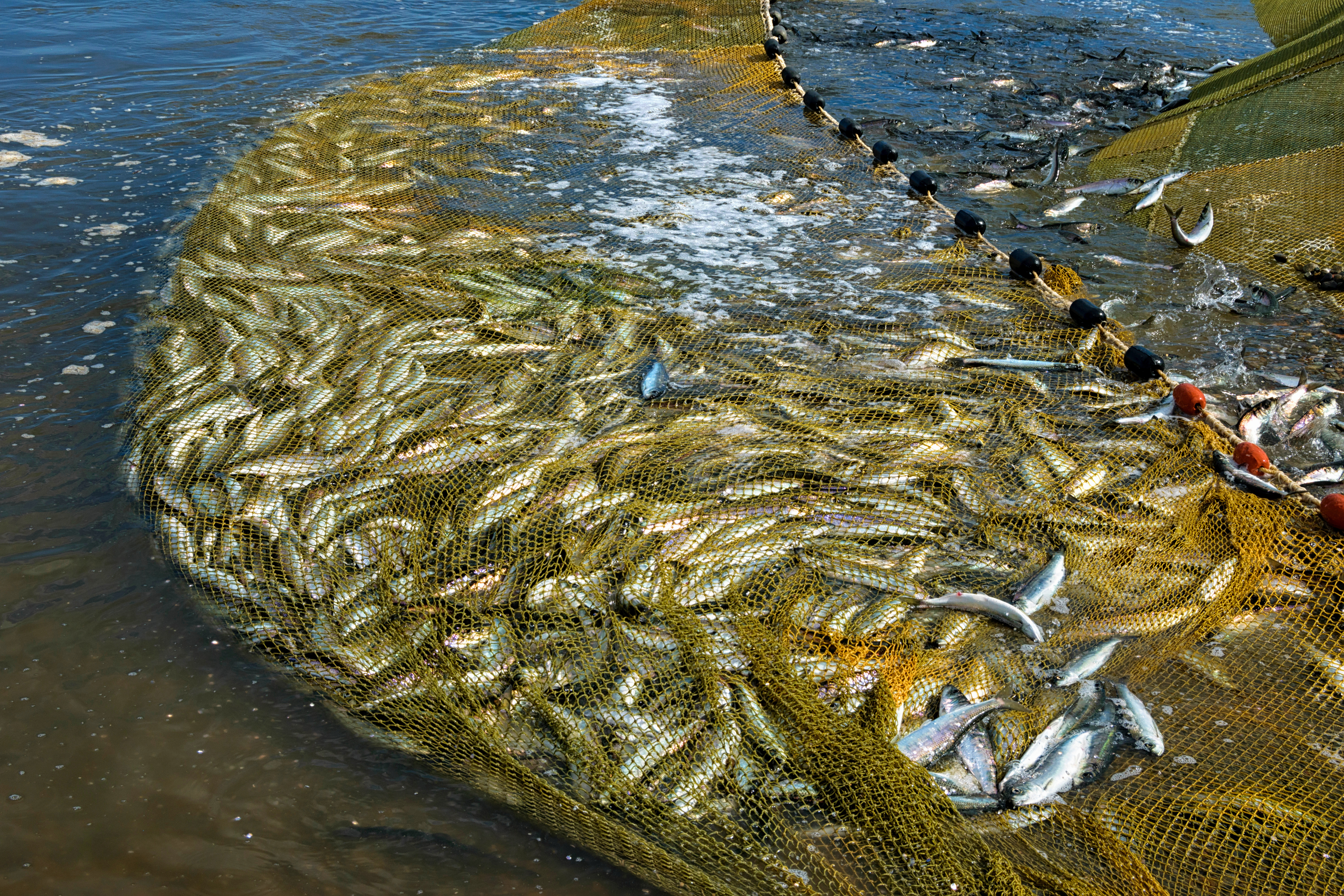
Researchers found that fishing practices can hide local population collapses by creating spatial mismatches between what managers see at large scales versus what's happening in small areas, using Pacific herring as a case study. The researchers developed three complementary models: theoretical equations showing how harvest affects spatial variability, analysis of Pacific herring data from British Columbia, and numerical simulations testing different management strategies. Harvesting metapopulations magnifies spatial variability, creating discrepancies between regional and local population trends. Spatial complexity can promote stability at large scales while hiding negative consequences for people and animals operating at small scales. Local population collapses can occur despite apparently sustainable harvests at regional scales. Dynamically optimizing harvest can minimize local collapse risk without sacrificing overall yield. The research shows how conventional large-scale fisheries management can inadvertently create 'cryptic collapses' that disproportionately harm Indigenous fishers and marine predators who depend on local fish populations, while suggesting management solutions that could prevent these less visible disasters.
Citation
Okamoto, Daniel K.; Hessing‐Lewis, Margot; Samhouri, Jameal F.; Shelton, Andrew O.; Stier, Adrian; Levin, Philip S.; Salomon, Anne K. (2020). Spatial variation in exploited metapopulations obscures risk of collapse. Ecological Applications.
This paper is Open Access.
Cite this article
Okamoto et al. (2020). Local Fish Population Collapses Can Slip Past Regional Management. Ocean Recoveries Lab. https://doi.org/10.1002/eap.2051