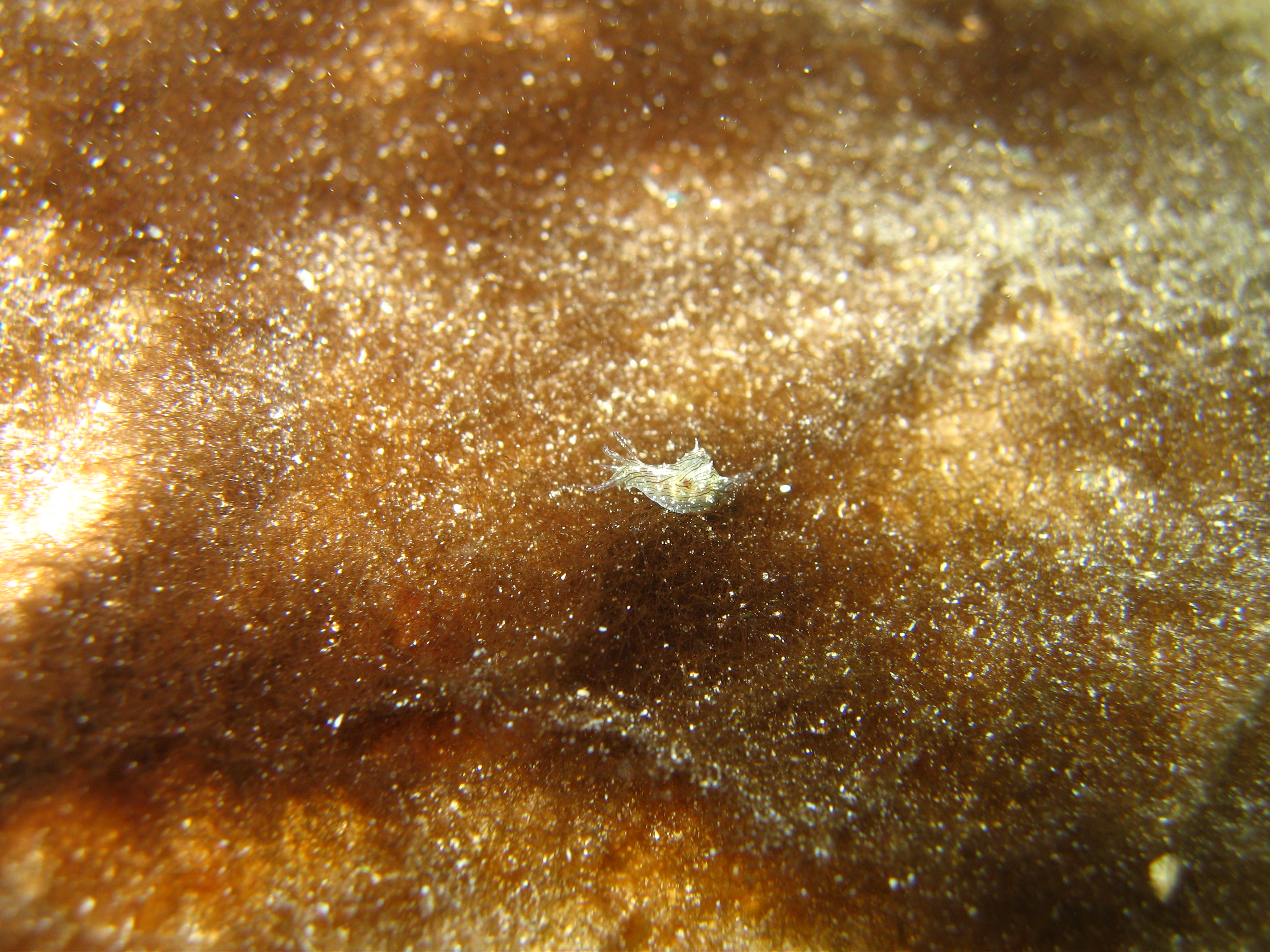
Researchers discovered that tiny sea slugs called nudibranchs can indirectly increase toxic cyanobacterial blooms on coral reefs by preying on sea hares, the herbivores that would otherwise graze down the harmful bacteria. The researchers conducted laboratory experiments at a field station in French Polynesia, testing how nudibranchs consume sea hares at different densities and sizes, and measuring the indirect effects on cyanobacterial biomass through controlled feeding trials. Nudibranchs consumed an average of 2.4 sea hares per day, with small sea hares being eaten 22 times more often than large ones. When nudibranchs were present, cyanobacterial biomass was 1.5 times greater compared to when nudibranchs were absent. Nudibranch predation significantly reduced sea hare numbers, creating a trophic cascade that benefits the toxic cyanobacteria. The research shows that predation pressure can worsen toxic algal blooms on coral reefs by removing the herbivores that control them, suggesting that protecting grazer populations may be important for managing these increasingly frequent and harmful blooms that smother corals and irritate humans.
Citation
Geange, S. W.; Stier, A. C. (2010). Charismatic microfauna alter cyanobacterial production through a trophic cascade. Coral Reefs.
Cite this article
Geange et al. (2010). Microzooplankton Predators Can Intensify Toxic Algal Blooms. Ocean Recoveries Lab. https://doi.org/10.1007/s00338-010-0606-5