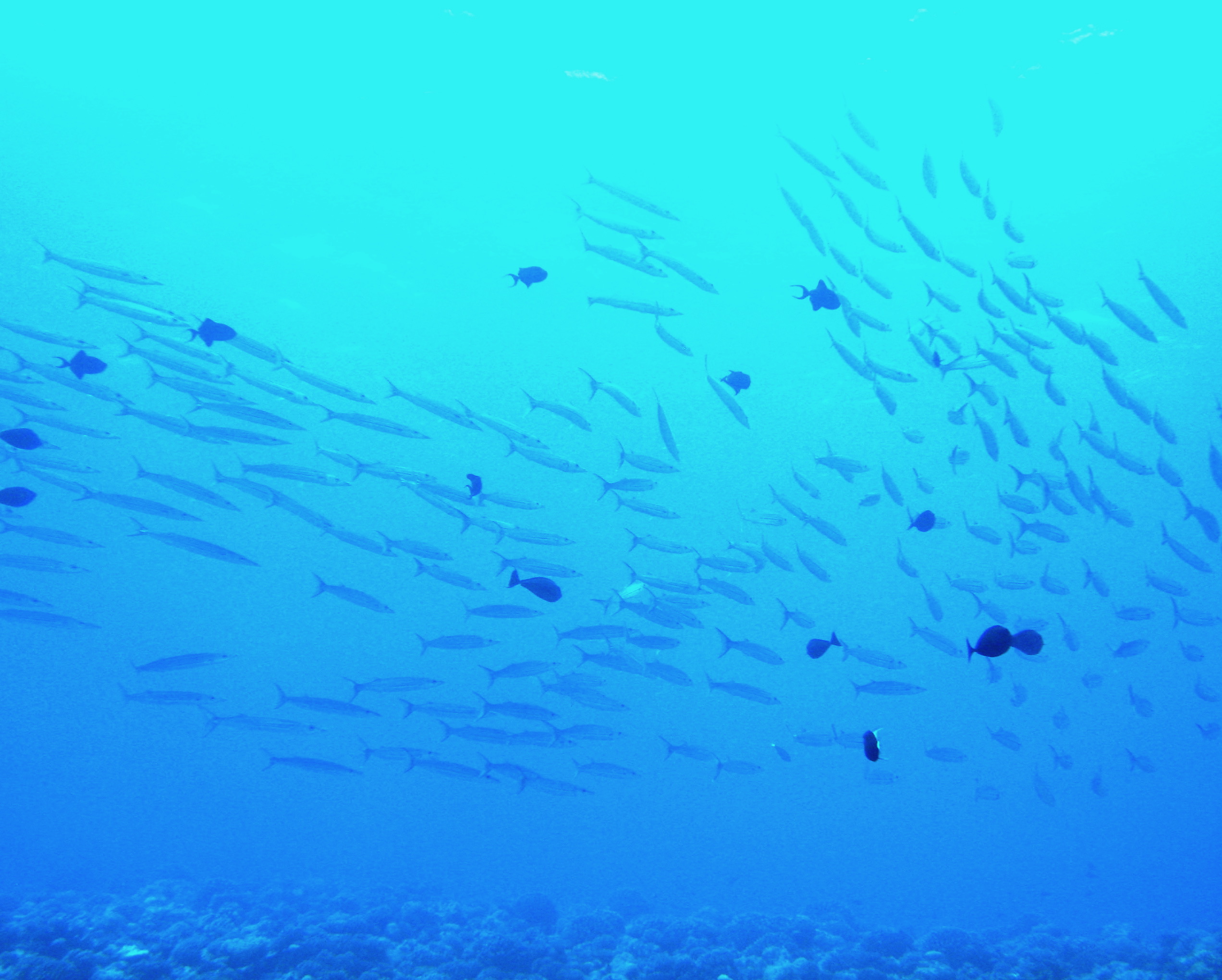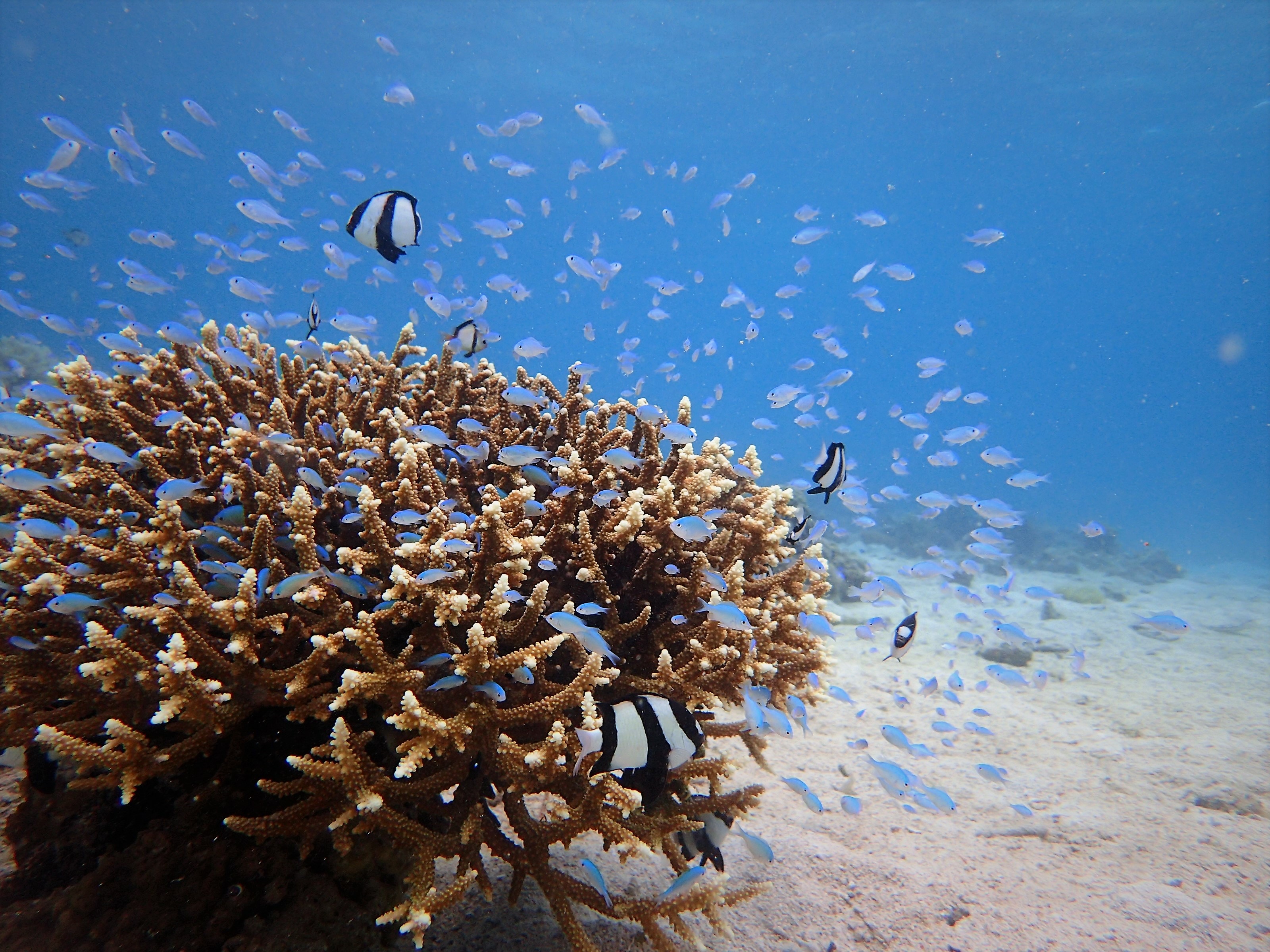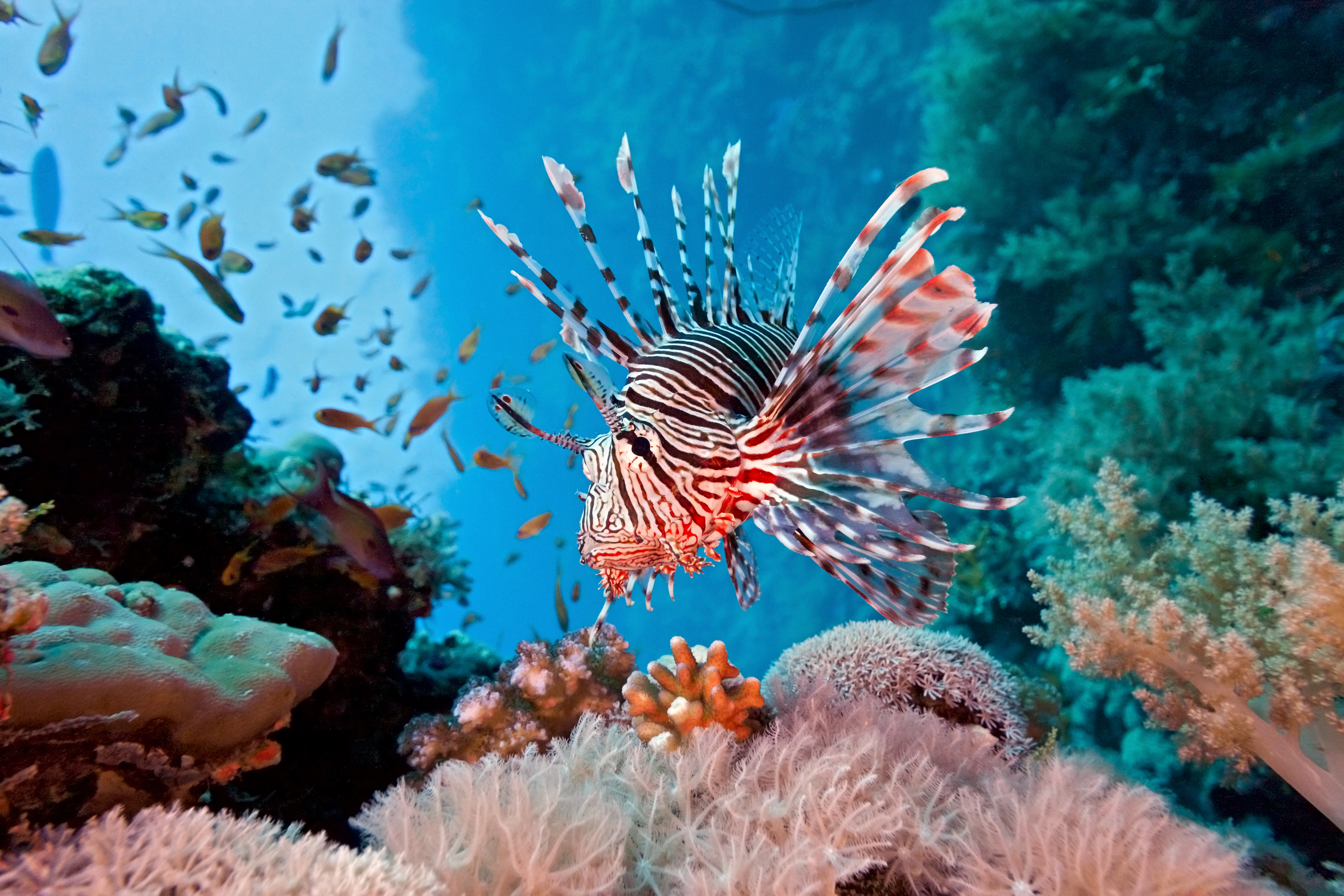
We descended onto the patch reefs of Caribbean Panama in January 2015 expecting to find what decades of research had suggested. Instead, they discovered something remarkable: native predators outnumbered the infamous invaders by staggering margins. On their surveys, native mesopredators like graysby and hamlets were 30 to 40 times more abundant than lionfish during timed counts.
We wanted to answer a critical question that had been nagging at marine biologists: Are lionfish really as devastating as we think, or does their impact depend heavily on local context? To find out, they conducted two types of underwater surveys around Bocas del Toro, counting fish on 24 individual patch reefs and swimming timed surveys across three sites. Then they brought the question into the lab, setting up aquarium experiments to directly compare how lionfish and native graysby affected the survival of masked gobies – small fish they'd observed being eaten voraciously by both predators in the wild.
The numbers told a clear story. Native mesopredators were much more common on patch reefs than lionfish, and their densities were higher when they were present. In the laboratory experiments, both lionfish and graysby killed similar numbers of gobies – there was no significant difference between the invasive and native predators. When they analyzed citizen science data from across eight Caribbean regions, they found that graysby were more abundant than lionfish.
"Instead, they discovered something remarkable: native predators outnumbered the infamous invaders by staggering margins."
What surprised We most was how consistently lionfish were outnumbered across different scales – from individual reefs to entire regions. They had expected the invasion to be further along. The laboratory results were equally unexpected: if lionfish were such uniquely devastating predators, shouldn't they have outperformed native species? Instead, their impacts were indistinguishable from those of graysby. The reasons for lower lionfish densities in this region require further investigation.
These findings matter because they challenge the narrative of lionfish as unstoppable ecological destroyers. If native predators are more abundant and equally impactful, then lionfish management might need to consider the bigger picture of reef predator communities. The results support calls for management strategies that account for local ecological and social dynamics rather than applying blanket approaches across all invaded regions.
But this is just one snapshot from one region. Scientists need to understand why lionfish densities vary so dramatically across the Caribbean and need longer-term studies to see if these patterns hold over time. The lionfish invasion is far from over, but Our work suggests that in some places, the reefs might be pushing back more successfully than previously realized.
Citation
Samhouri, Jameal F.; Stier, Adrian C. (2021). Ecological impacts of an invasive mesopredator do not differ from those of a native mesopredator: lionfish in Caribbean Panama. Coral Reefs.
This paper is Open Access.
Cite this article
Samhouri et al. (2021). Native Fish Vastly Outnumber Invasive Lionfish in Caribbean Panama Waters. Ocean Recoveries Lab. https://doi.org/10.1007/s00338-021-02132-8