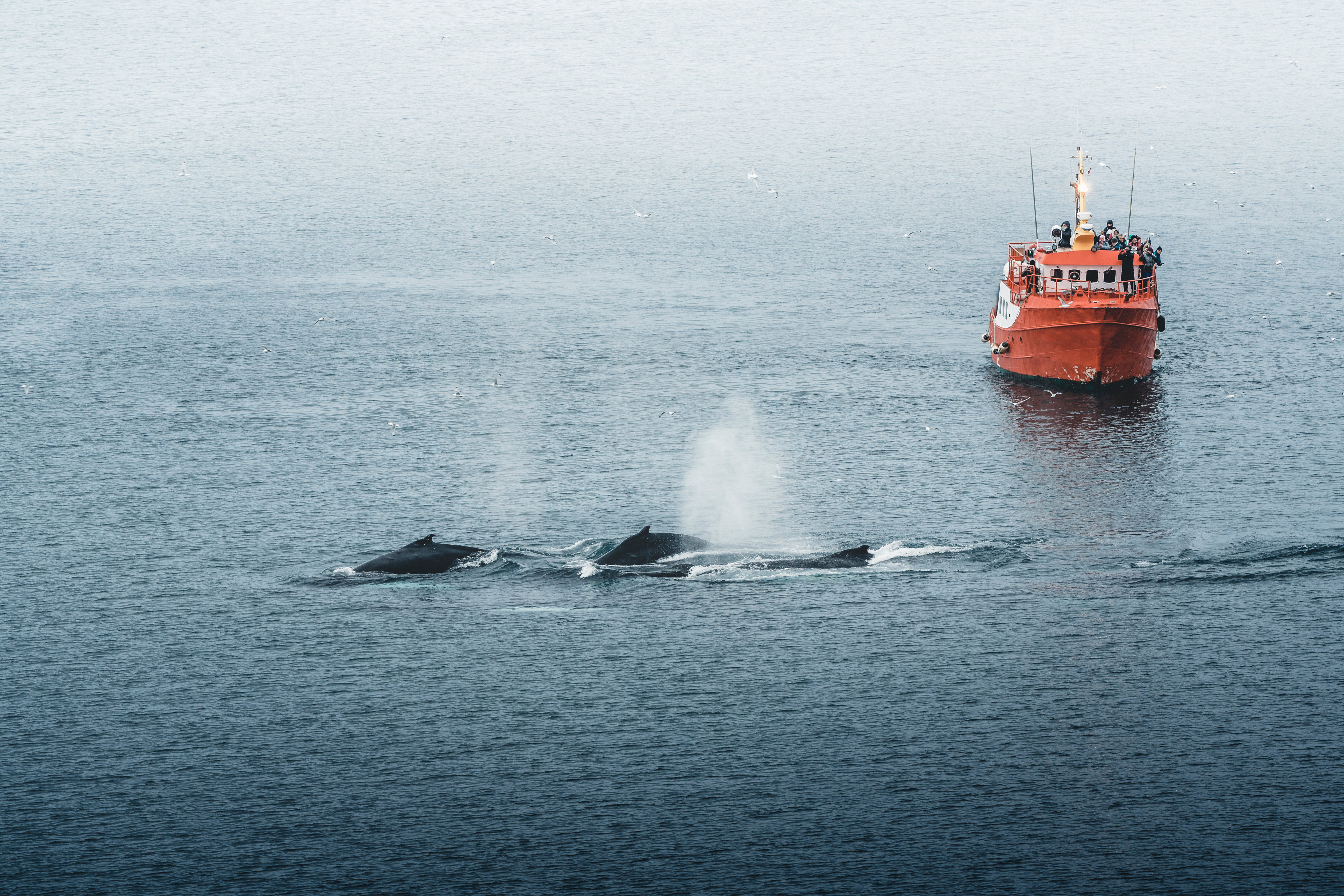
We started with what seemed like a success story. North Atlantic right whales had been recovering steadily since the end of whaling, helped by abundant copepod prey and vessel speed restrictions that kept ships away from sensitive habitats. Then, in 2017, something changed. Rapid warming reduced the availability of copepods, causing reproductive failure, and the whales followed their remaining prey into areas where effective vessel avoidance measures weren't in place. Suddenly, mortality from collisions and entanglement skyrocketed. Scientists Jameal Samhouri, Kurt Ingeman, and Adrian Stier realized they were witnessing something larger—a fundamental problem with how we think about ocean recovery.
We wanted to understand why so many marine recovery efforts remain unsuccessful even after decades of active intervention, despite growing scientific awareness and strong regulations. They synthesized research across marine recovery efforts, analyzing how environmental shifts create moving targets for conservation. Rather than conducting new field work, they examined existing case studies and developed a theoretical framework for understanding recovery in dynamic systems.
What they found challenged the core assumptions of marine conservation. Recovery efforts often fail because they treat ecosystems and recovery goals as static, when marine social-ecological systems are inherently dynamic and increasingly so in an era of rapid climate change. We identified that successful recoveries can encompass a range of outcomes in the space between minimum ecological viability and maximum carrying capacity, rather than pursuing a single fixed target. The North Atlantic right whale case perfectly illustrated this—reduced productivity and increased mortality meant recovery timelines needed recalibrating compared to original projections.
What surprised We most was how rigid thinking about recovery had become. They discovered that different stakeholders might prefer to maximize growth rate for maximum yield, while others might prefer to maximize abundance, creating trade-offs between potential recovery targets that are rarely acknowledged. The paper doesn't explain exactly how these trade-offs should be resolved—that's still an open question. We also note they can't predict precisely how interactions among multiple components of environmental change will affect tomorrow's ocean.
This matters because billions of people depend upon the ocean for food, livelihoods, energy production, and trade, yet humans living on tomorrow's Earth will demand even more from the ocean. We' framework suggests that recovery efforts must embrace institutional and tactical flexibility to keep pace with a changing ocean. Policy-makers need to adopt nimble approaches that enable rapid response to changing conditions and allow fluid coordination among institutions. Without this flexibility, conservation efforts will forever chase moving targets.
Looking ahead, We still don't know how to operationalize an inclusive definition of recovery organized around social-ecological resilience—it will prove more challenging than simply recrafting recovery policies with new metrics. There's a need to design policies that align incentives for disparate human actors toward coherent recovery goals. Emerging technologies like rope-less fishing gear and real-time data sharing offer hope, but fundamental questions remain about how to predict and manage recovery in an uncertain future. The mechanism for building truly adaptive recovery systems remains unclear, and that's what We needs to figure out next.
Citation
Ingeman, Kurt E.; Samhouri, Jameal F.; Stier, Adrian C. (2019). Ocean recoveries for tomorrow’s Earth: Hitting a moving target. Science.
This paper is Open Access.
Cite this article
Ingeman et al. (2019). Ocean Conservation Is Chasing Moving Targets as Climate Change Rewrites Recovery Rules. Ocean Recoveries Lab. https://doi.org/10.1126/science.aav1004