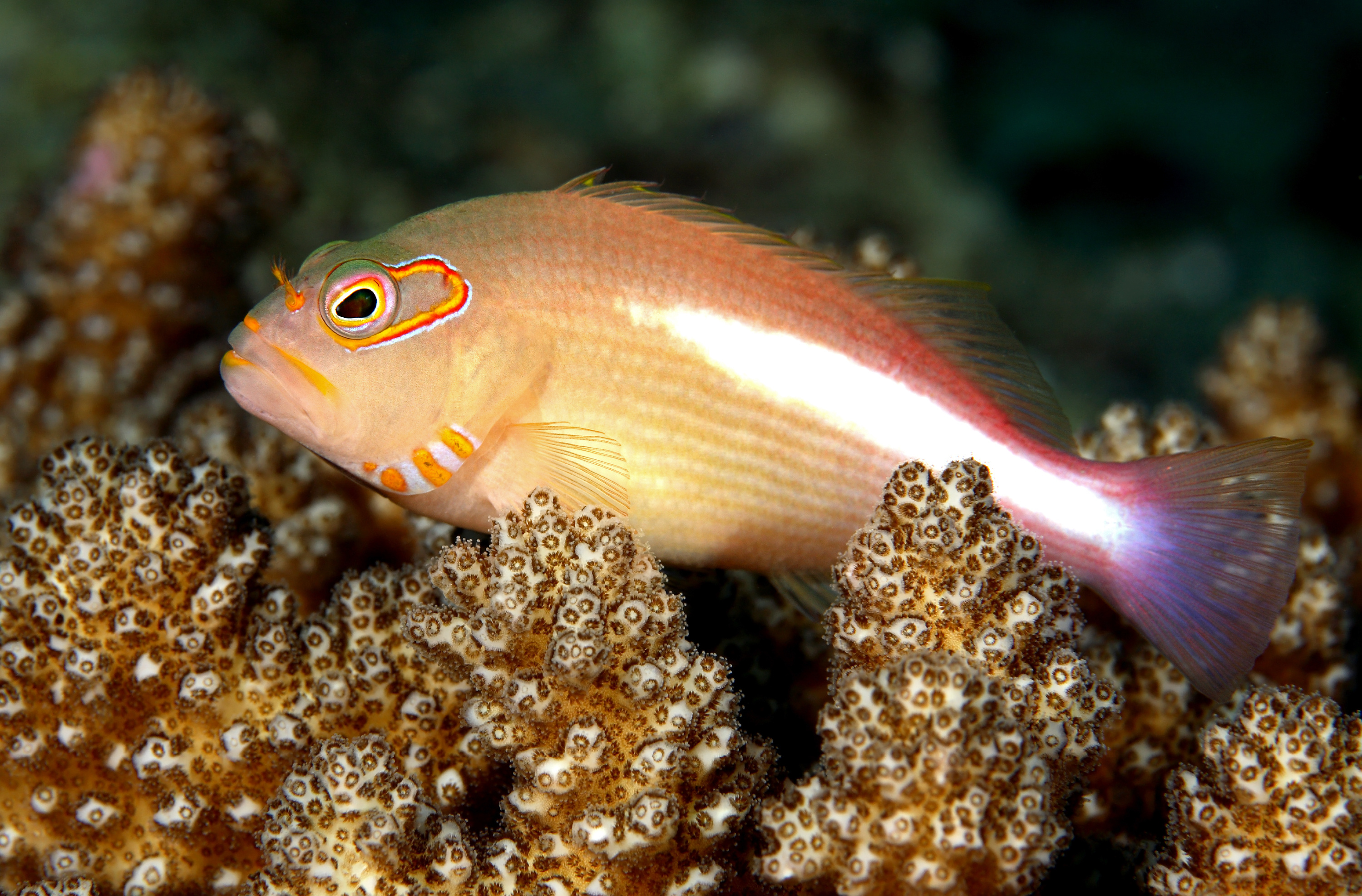
Scientists studying coral reef fish found that when predatory hawkfish arrive to colonize reefs matters just as much as how many show up, substantially changing which fish species survive and thrive in reef communities. Researchers first surveyed 192 natural patch reefs in French Polynesia for five months to document hawkfish behavior patterns, then conducted field experiments using artificial reefs to test how timing and density affected fish community development. Hawkfish presence reduced prey fish abundance by 50% compared to reefs without predators. Doubling hawkfish density caused an additional 33% reduction in prey abundance beyond the initial 50%. Late-arriving hawkfish caused a 34% additional reduction in prey compared to early arrivals. Predator timing affected community composition and increased diversity differences between patches by 22%, even though it didn't change species richness within patches. The research shows that the timing of predator colonization can be as important as predator density in shaping entire reef communities, suggesting that conservation efforts need to consider not just how many predators are present, but when they arrive relative to their prey.
Citation
Stier, Adrian C.; Geange, Shane W.; Hanson, Kate M.; Bolker, Benjamin M. (2013). Predator density and timing of arrival affect reef fish community assembly. Ecology.
Cite this article
Stier et al. (2013). Predator Arrival Timing Reshapes Reef Fish Communities. Ocean Recoveries Lab. https://doi.org/10.1890/11-1983.1