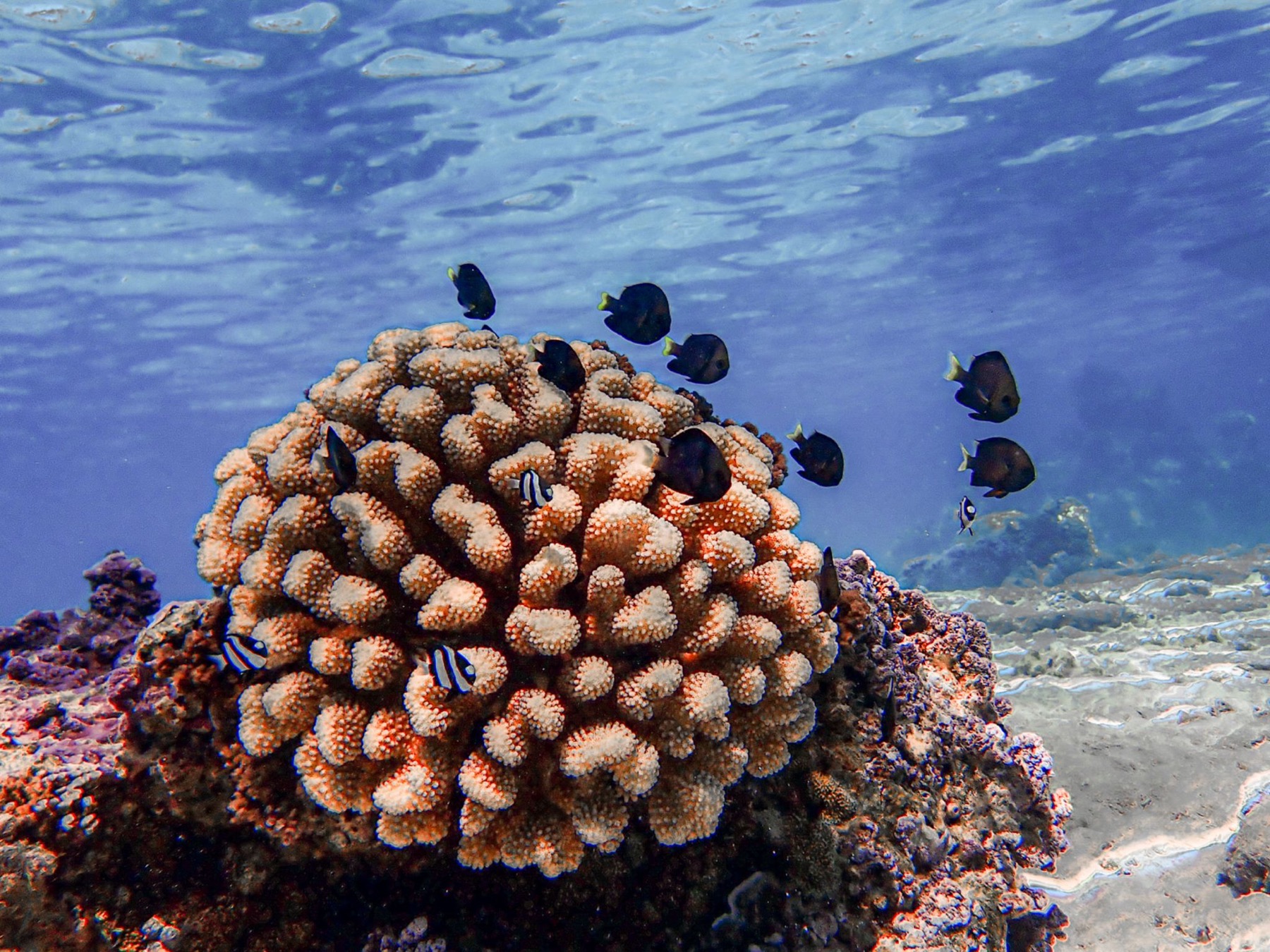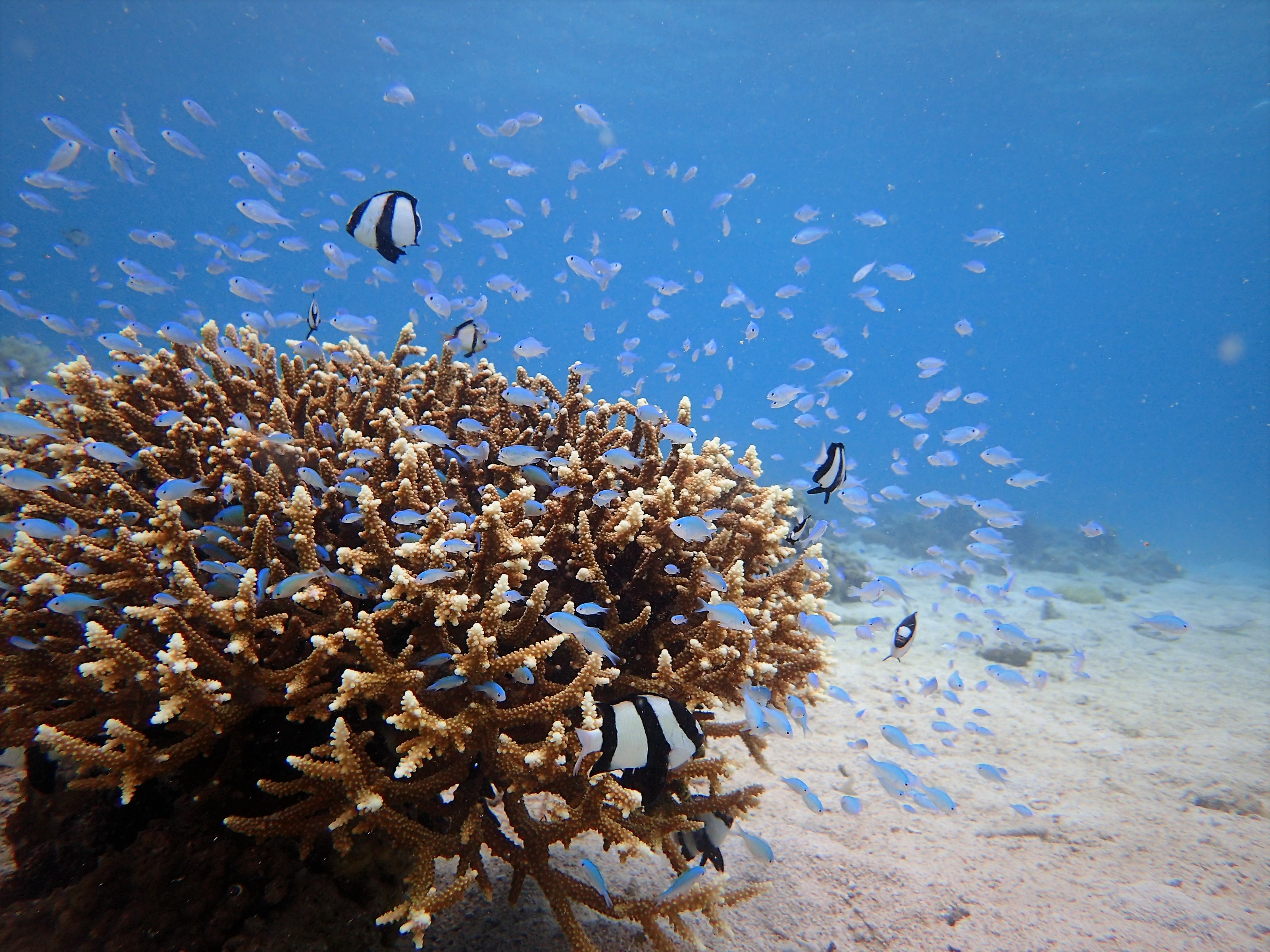
Researchers studied how coral colony density and predation by fish affect the growth and survival of small staghorn corals, finding that predators devastate young corals regardless of how crowded they are together. Scientists placed small staghorn coral pieces at three different densities (single corals, 4 corals per platform, and 8 corals per platform) on patch reefs in Moorea, French Polynesia. Half were protected in mesh cages to exclude corallivorous fish, half were left exposed. They tracked growth and survival over 30 days and one year. Corallivorous fish caused high mortality in exposed corals after 30 days, while all protected corals survived with no damage. Coral density had no effect on predation rates; fish attacked corals equally whether they were alone or in groups. Protected corals showed large growth over one year. When protected from predators, corals grew faster when they had neighbors compared to when they were alone. The research shows that young staghorn corals face severe predation pressure regardless of how densely they're packed together, suggesting that predator control rather than coral spacing may be important for reef recovery. It challenges the idea that grouping corals together provides safety in numbers.
Citation
Kopecky, Kai L.; Cook, Dana T.; Schmitt, Russell J.; Stier, Adrian C. (2021). Effects of corallivory and coral colony density on coral growth and survival. Coral Reefs.
This paper is Open Access.
Cite this article
Kopecky et al. (2021). Predator Dilution Can Fail for Young Corals. Ocean Recoveries Lab. https://doi.org/10.1007/s00338-021-02076-z