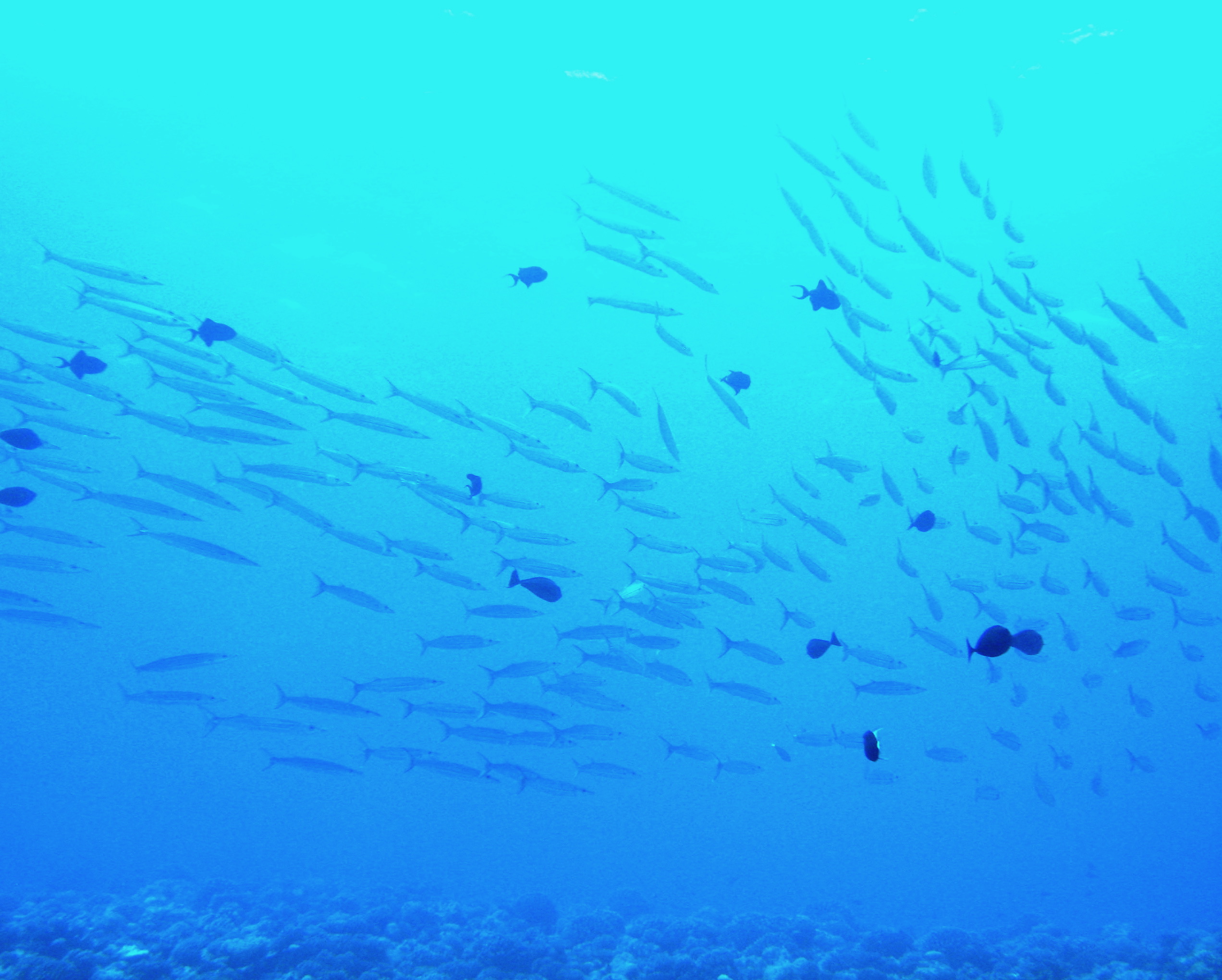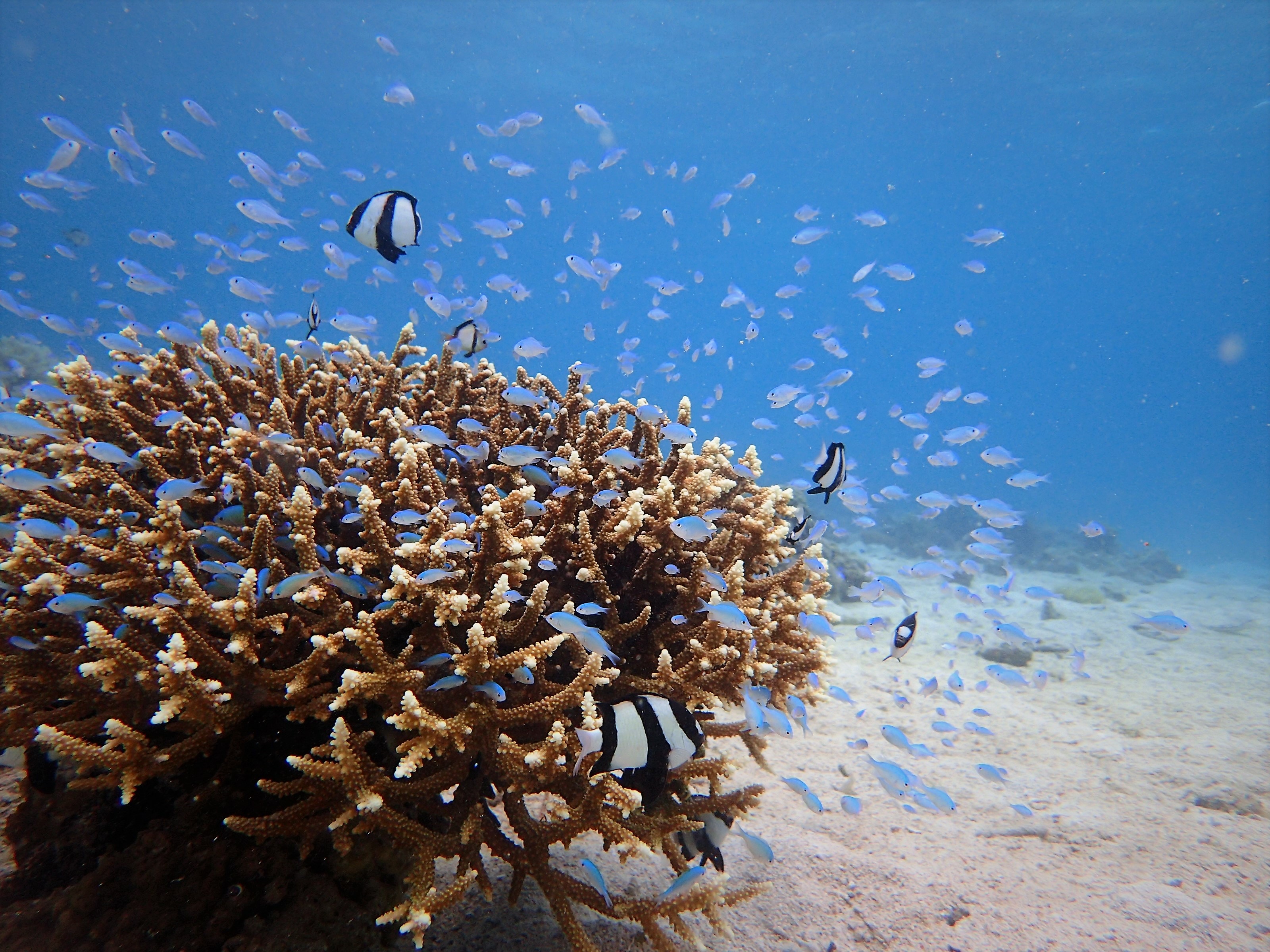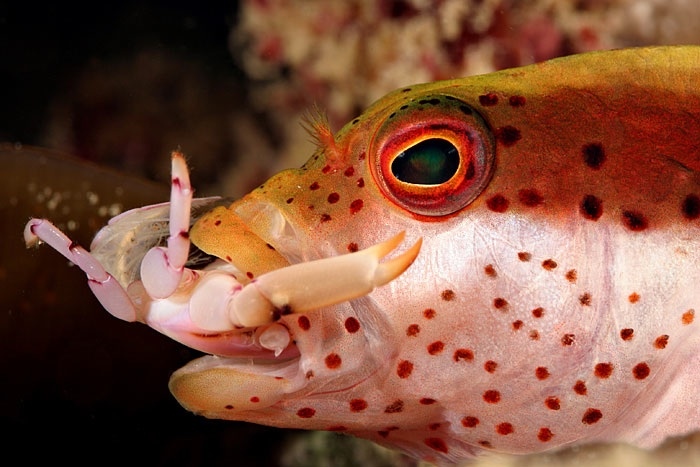
We developed mathematical models at UC Santa Barbara to explore a paradox observed developed mathematical models to explore a paradox observed in coral reefs around Moorea, French Polynesia. Hawkfish are the dominant competitors for space on branching Pocillopora corals, but corals hosting damselfish grow significantly faster than those with hawkfish.
We wanted to understand what happens when predators enter this equation. Both hawkfish and damselfish are eaten by transient predatory fish like the longface emperor, but at different rates. They built a mathematical model that tracked coral populations, the two competing fish species, and their predators over time.
The model revealed something counterintuitive. When predators preferentially consume the competitively dominant hawkfish, they can reverse the outcome of competition, allowing the higher-quality damselfish to flourish instead. In these scenarios, predation creates cascading benefits that flow up to the coral hosts. The key insight is that the direction and strength of predator effects depend on asymmetries in mutualist competition, service provision, and predation vulnerability.
This challenges the conventional wisdom that predators always harm mutualisms by reducing mutualist abundance. The model shows that sometimes predators can enhance host performance by consuming the less beneficial partners. Fish excrete nitrogen-rich waste products which are taken up by coral and transferred to photosynthetic algae, stimulating coral growth. Predation rates in Moorea are not well known and vary significantly across sites.
This has implications for coral reef conservation. As predators are removed from reefs through fishing and other human activities, this might inadvertently favor fish communities that provide fewer benefits to already-stressed corals. In an era of widespread coral decline, understanding these connections between predators and coral health could inform marine protected area management.
The findings raise questions about broader implications across other ecosystems. How many other mutualisms are shaped by this kind of predator-mediated partner switching? And what happens when climate change shifts predator ranges and abundances? The web of interactions in nature is more intricate than previously understood.
Citation
Moeller, Holly V.; Nisbet, Roger M.; Stier, Adrian C. (2023). Cascading benefits of mutualists' predators on foundation species: A model inspired by coral reef ecosystems. Ecosphere.
This paper is Open Access.
Cite this article
Moeller et al. (2023). Predators May Actually Help Coral Reefs by Eating the 'Wrong' Fish. Ocean Recoveries Lab. https://doi.org/10.1002/ecs2.4382