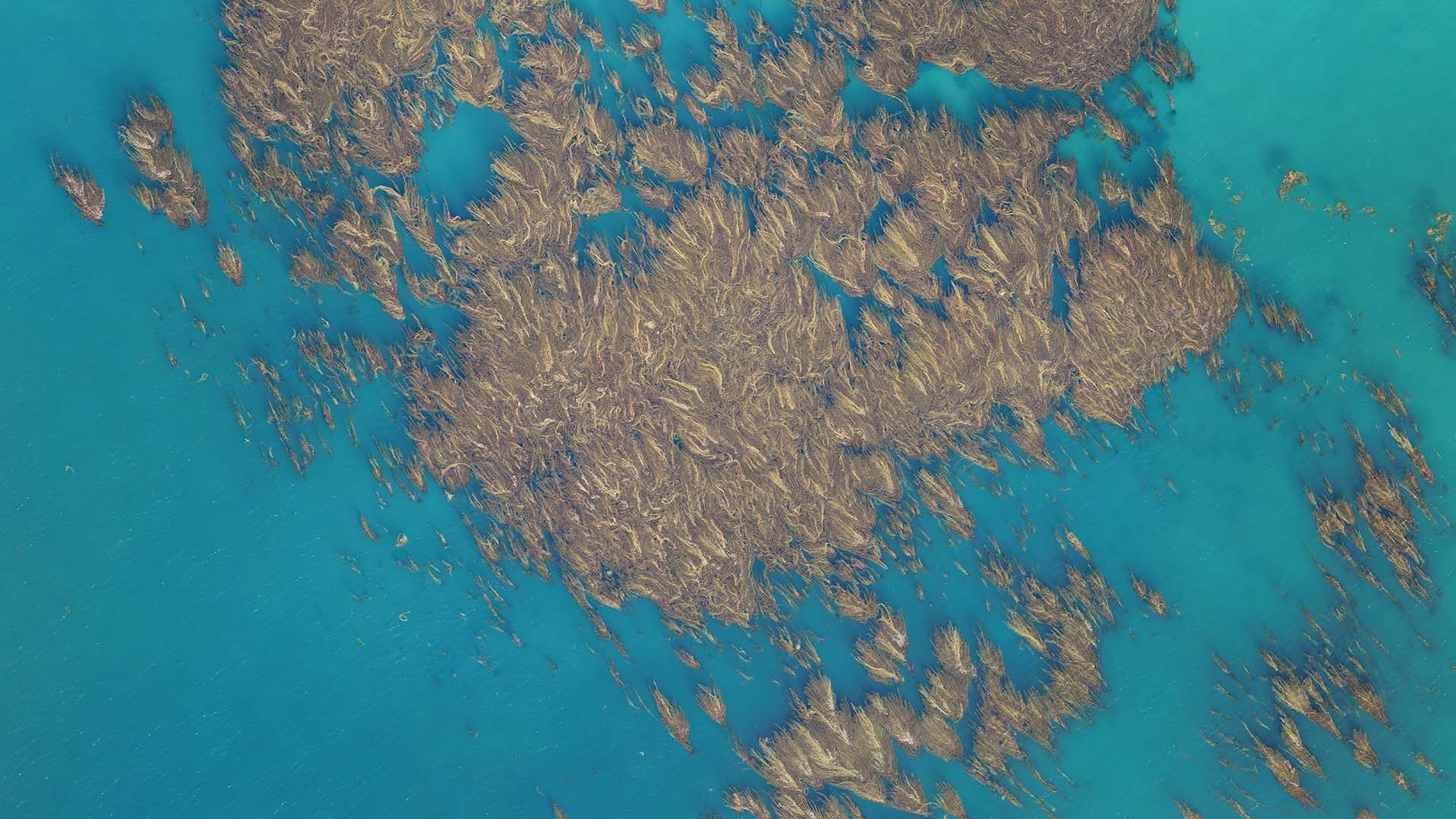
Scientists discovered that sea urchins cause severe kelp forest collapse when their grazing overwhelms kelp production, but kelp detritus (dead kelp pieces) can prevent this collapse by feeding urchins and reducing their appetite for living kelp. Researchers conducted laboratory feeding experiments with different densities of sea urchins, then combined those results with 21 years of kelp forest monitoring data from the Santa Barbara Channel to predict when urchin grazing would exceed kelp production. When urchin grazing capacity exceeded kelp production, sea urchins caused a 50-fold reduction in giant kelp biomass. The balance between herbivory and production determines when kelp forests collapse into urchin barrens. Detrital kelp supply suppresses deforestation by providing alternative food for urchins. Urchin foraging rates vary predictably with urchin biomass, allowing scientists to forecast ecosystem collapse. The research provides a mechanistic understanding of kelp forest collapse, helping scientists predict when and where these productive ecosystems might shift to low-diversity urchin barrens that persist for decades and provide fewer services to people and nature.
Citation
Rennick, Mae; DiFiore, Bartholomew P.; Curtis, Joseph; Reed, Daniel C.; Stier, Adrian C. (2022). Detrital supply suppresses deforestation to maintain healthy kelp forest ecosystems. Ecology.
This paper is Open Access.
Cite this article
Rennick et al. (2022). Kelp Forest Collapse Depends on Urchin Grazing and Kelp Supply. Ocean Recoveries Lab. https://doi.org/10.1002/ecy.3673