We examined participatory management, where stakeholders collaborate on marine resource decisions. But research led by John Lynham with an international team of marine scientists reveals an unintended consequence: the costs of bringing everyone together can actually make it harder to restore damaged ecosystems.
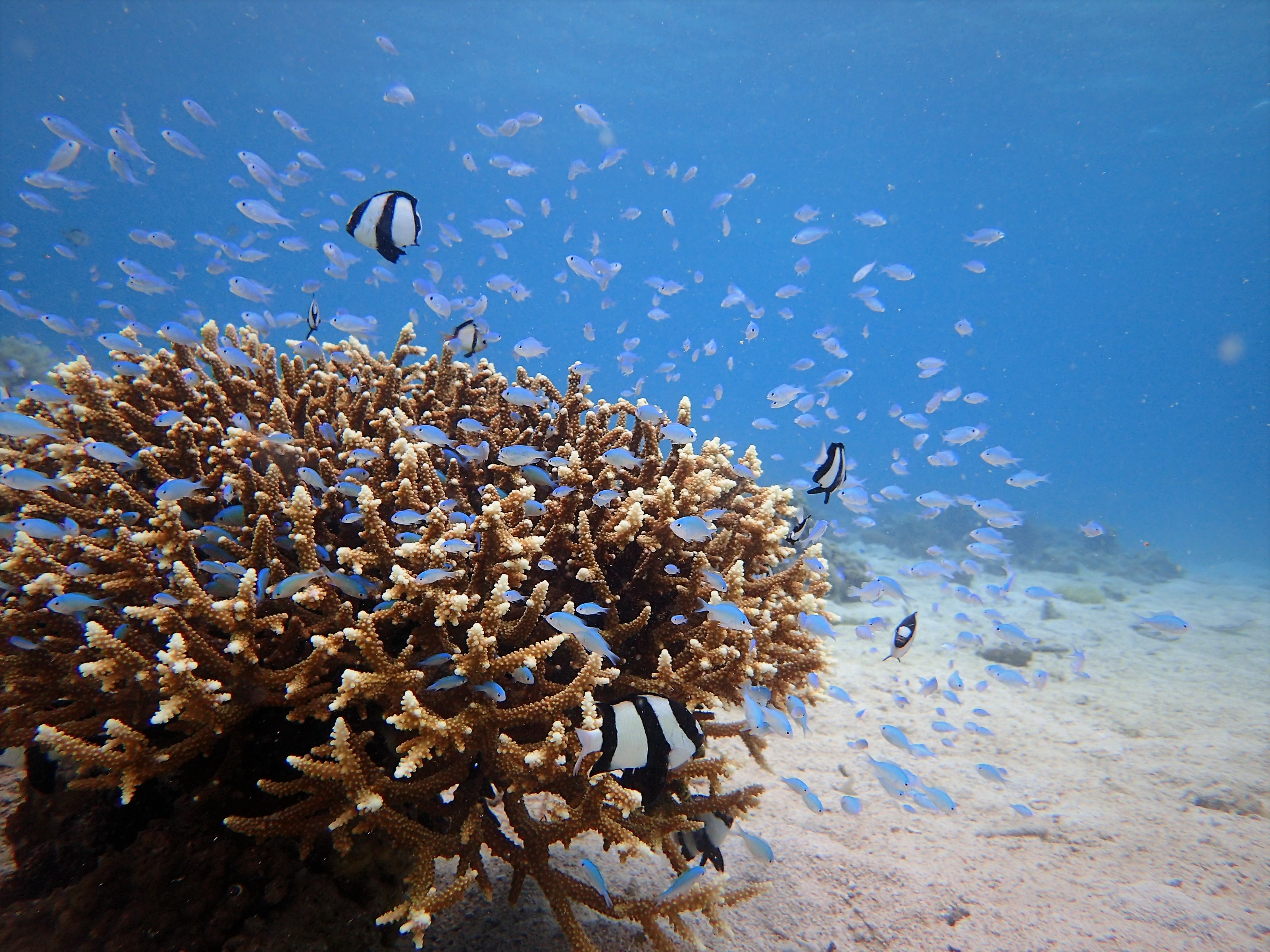
We developed a theoretical framework examining how transaction costs in management, the time, money, and effort required for stakeholder processes, interact with ecosystem dynamics. Marine ecosystems often exist in alternative stable states: a kelp forest might flip to an urchin barren, or a coral reef might shift to algal dominance. These regime shifts are notoriously difficult to reverse.
The key insight is that management transaction costs create inertia. Changing fishing regulations requires gathering stakeholders, conducting assessments, negotiating compromises, and implementing new rules. These costs must be overcome before any management change occurs, regardless of ecological conditions. This creates a barrier that must be cleared before ecosystems can begin recovering.
Consider a degraded fishery where everyone agrees stocks need protection. Even with consensus, actually implementing new rules requires expensive stakeholder processes. The time lag created by these processes allows further degradation, potentially pushing the system past ecological tipping points where recovery becomes even harder.
The same inertia cuts both ways. Once a healthy ecosystem is established under a management regime, the costs of changing that regime protect it from degradation. The barriers that make recovery difficult also make collapse harder. This suggests that investing heavily in management to achieve ecosystem recovery is worthwhile because the same institutional inertia will then protect the restored state.
The findings don't argue against participatory management, but highlight the need to factor these dynamics into management design. Streamlining decision processes, establishing pre-approved adaptive management triggers, or reducing transaction costs during crisis periods could help ecosystems escape degraded states more readily.
Citation
Lynham, J.; Halpern, B.S.; Blenckner, T.; Essington, T.; Estes, J.; Hunsicker, M.; Kappel, C.; Salomon, A.K.; Scarborough, C.; Selkoe, K.A.; Stier, A. (2017). Costly stakeholder participation creates inertia in marine ecosystems. Marine Policy.
Cite this article
Lynham et al. (2017). The Hidden Cost of Getting Everyone to the Table: Why Participatory Management Can Trap Damaged Oceans. Ocean Recoveries Lab. https://doi.org/10.1016/j.marpol.2016.11.011