We studied predation on coral reefs and discovered that timing matters as much as size when it comes to survival.
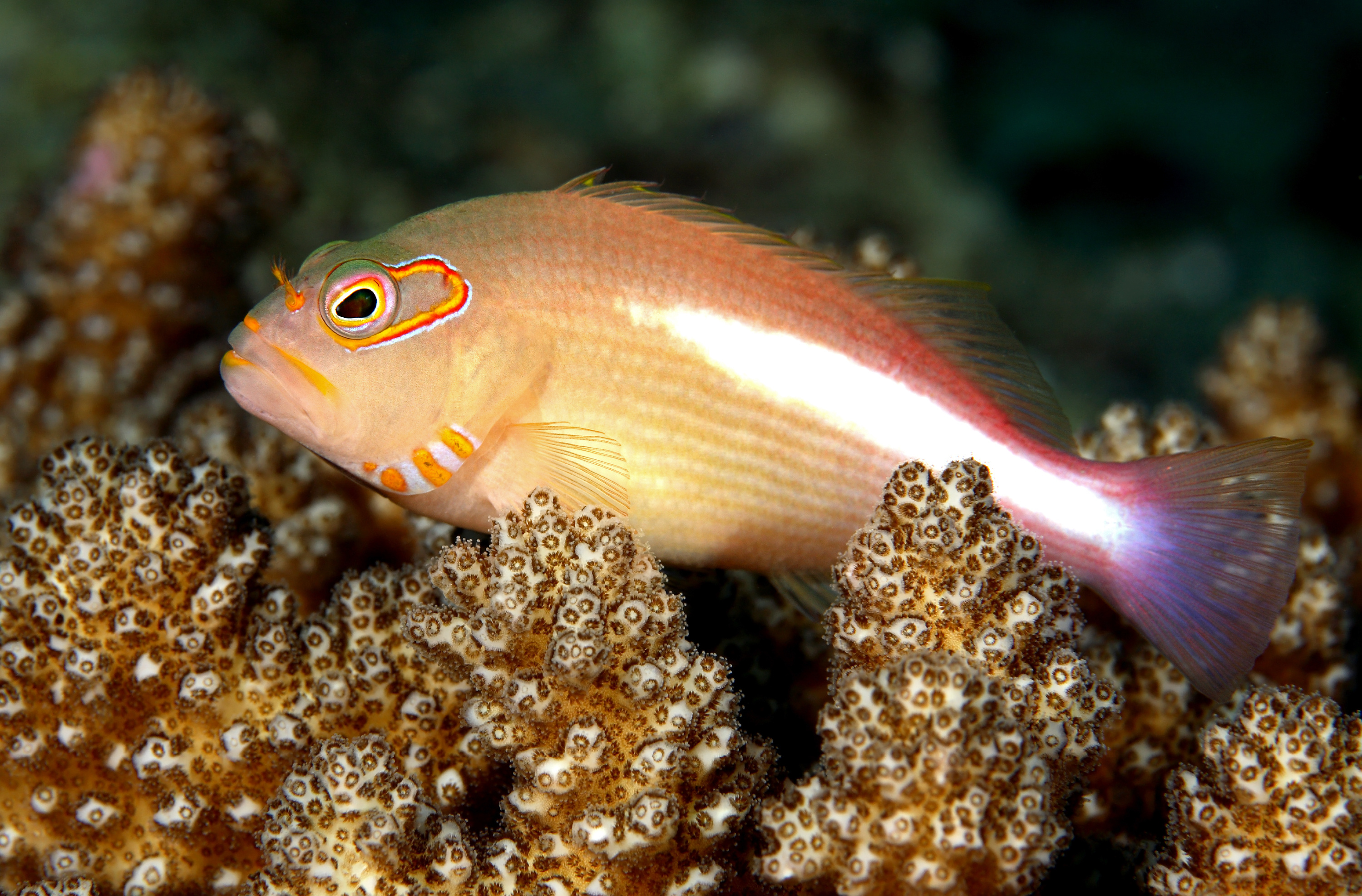
For five months, We surveyed 192 natural patch reefs twice weekly, documenting the presence and absence of hawkfish (Paracirrhites arcatus), sit-and-wait carnivores that perch on coral branches. What they found was striking: these predators were present only 47% of the time on average, staying continuously for an average of 7 days before disappearing again. Some reefs had low-density, stable hawkfish populations; others experienced dramatic changes in predator numbers over time.
We then conducted controlled field experiments using artificial reefs, manipulating hawkfish arrivals to test different scenarios including early arrivals, late arrivals, and varying densities. Our results revealed the powerful effects of timing on reef communities.
"What they found was striking: these predators were present only 47% of the time on average, staying continuously for an average of 7 days before disappearing again."
Hawkfish presence reduced prey fish abundance by 50% compared to reefs without predators. When researchers doubled hawkfish density, prey suffered an additional 33% reduction. But the timing effect was nearly as powerful: when hawkfish arrived late in community development, they caused a 34% additional reduction in prey abundance compared to early arrivals. Hawkfish didn't change species richness within patches, but they increased differences between patches by 22% and fundamentally altered which species dominated each reef.
Surprisingly, variability in hawkfish density over time didn't matter—only the timing and total density affected prey communities. We expected temporal fluctuations to create refuges for prey during predator-free periods, but the data showed no such effect.
These findings matter because most predation studies use constant predator densities, missing the dynamic reality of natural systems. The research suggests that conservation efforts focusing only on predator abundance may miss critical aspects of community dynamics. If the timing of predator colonization shapes entire communities, then understanding migration patterns, seasonal movements, and recruitment timing becomes crucial for predicting reef resilience.
The study raises important questions about how prey communities recover when predators leave, whether different predator species show similar timing effects, and what drives the natural patterns of hawkfish movement. The work provides a reminder that in ecology, when something happens can matter just as much as what happens.
Citation
Stier, Adrian C.; Geange, Shane W.; Hanson, Kate M.; Bolker, Benjamin M. (2013). Predator density and timing of arrival affect reef fish community assembly. Ecology.
Cite this article
Stier et al. (2013). Timing Is Everything: When Predator Fish Arrive at Coral Reefs Reshapes Entire Communities. Ocean Recoveries Lab. https://doi.org/10.1890/11-1983.1